VERMILLION BLISS: WHERE LUXURY MEETS PURE FICTION

old money energy, zero budget

old money energy, zero budget

A luxury furniture brand built from scratch using AI and Figma Make.

ROLE

Brand Designer & Creative Director

RESPONSIBILITIES

  • Visual Identity & Brand Design
    Logo, color system, typography, token architecture

  • AI Art Direction
    Midjourney and Gemini prompt engineering to generate and match product photography to fabric swatches

  • Interactive Experience Design
    Multi-page e-commerce site with live fabric configurator

  • No-Code Development
    Full site build in Figma Make

This wasn't a client project. It was a dare.

Vermillion Bliss started as an experiment in Figma Make — a chance to push a new tool to its limits and see what one designer could build without a dev team, a budget, or a real product. The brief was self-imposed: create a luxury furniture brand from absolute zero. Concept, identity, photography, and a fully shoppable interactive site — all of it, solo.

Part of that process meant asking: what does luxury actually look like on screen? The answer I kept coming back to was commitment. In interior design, color drenching — painting the ceiling the same color as the walls — is a bold, expensive-feeling choice that most people are too afraid to make. That became the visual philosophy. Commit fully, no hedging. The rich background blur overlays, the deliberate layering of type scales, the details that a "clean" redesign would strip out — those are the crown molding. The fancy knobs. The thing that makes a room feel like somebody with taste lived in it.

The result is a brand that feels like it's been on Fifth Avenue for decades. It was built in a week, with AI handling the photography and Figma Make handling the code. Every fabric swatch, every product image, every gilded detail — designed, directed, and delivered by one person with strong opinions and a very good prompt.

Vermillion Bliss started as an experiment in Figma Make — a chance to push a new tool to its limits and see what one designer could build without a dev team, a budget, or a real product. The brief was self-imposed: create a luxury furniture brand from absolute zero. Concept, identity, photography, and a fully shoppable interactive site — all of it, solo.

Part of that process meant asking: what does luxury actually look like on screen? The answer I kept coming back to was commitment. In interior design, color drenching — painting the ceiling the same color as the walls — is a bold, expensive-feeling choice that most people are too afraid to make. That became the visual philosophy. Commit fully, no hedging. The rich background blur overlays, the deliberate layering of type scales, the details that a "clean" redesign would strip out — those are the crown molding. The fancy knobs. The thing that makes a room feel like somebody with taste lived in it.

The result is a brand that feels like it's been on Fifth Avenue for decades. It was built in a week, with AI handling the photography and Figma Make handling the code. Every fabric swatch, every product image, every gilded detail — designed, directed, and delivered by one person with strong opinions and a very good prompt.

ONE: THE BRAND

Built to Look Like It's Always Existed

A visual identity built on commitment, contrast, and the audacity to drench the walls.
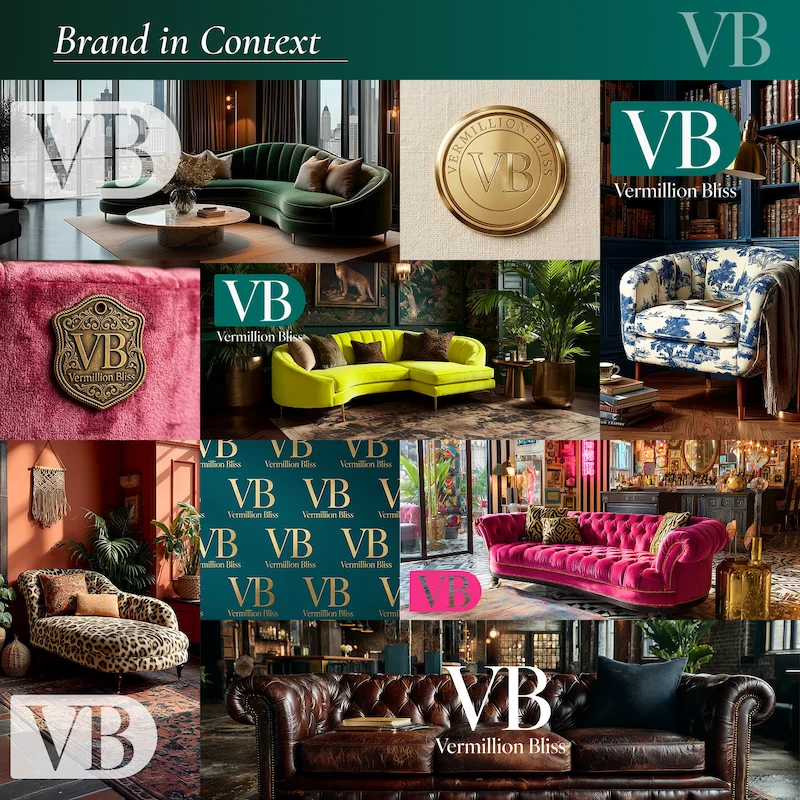
Building a brand from zero means every decision is a design decision. For Vermillion Bliss, that meant developing a complete visual identity — logo, color system, typography, and brand voice — with no client brief, no guidelines to inherit, and no product to photograph. Just a creative direction and the conviction to follow it all the way through. The result is a brand that looks like it has been on Fifth Avenue for decades and has absolutely no interest in explaining itself to you.

The brand had to:

  • Ditch the “sad beige aesthetic” in favor of joy, motion, and maybe a little chaos.

  • Feel playful but intentional.

  • Flex across digital, print, and product.

  • Invite trust, delight, and curiosity in equal measure.

Building a brand from zero means every decision is a design decision. For Vermillion Bliss, that meant developing a complete visual identity — logo, color system, typography, and brand voice — with no client brief, no guidelines to inherit, and no product to photograph. Just a creative direction and the conviction to follow it all the way through. The result is a brand that looks like it has been on Fifth Avenue for decades and has absolutely no interest in explaining itself to you.

Logo & Mark

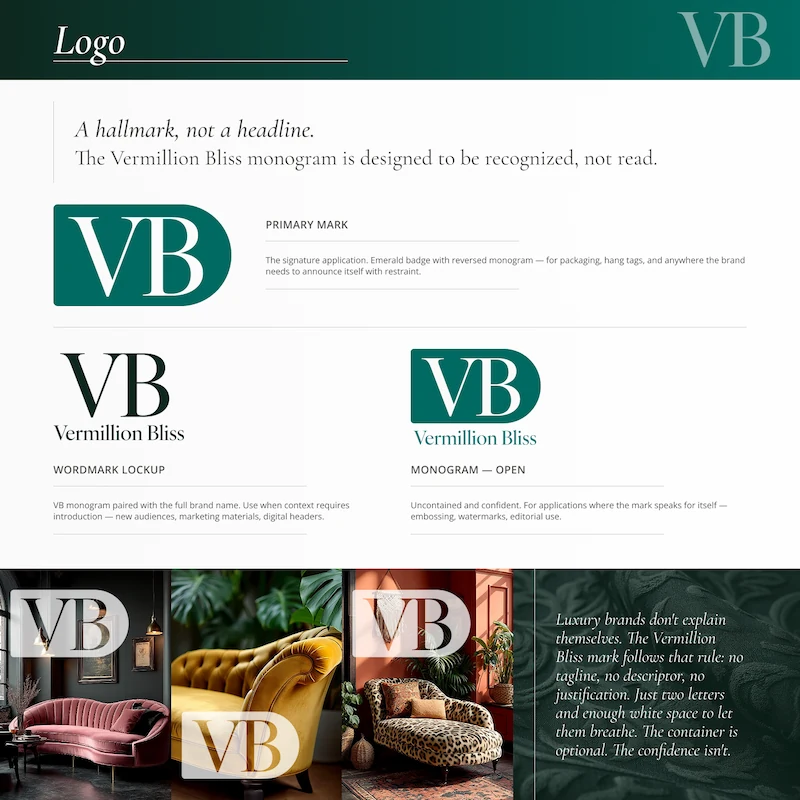
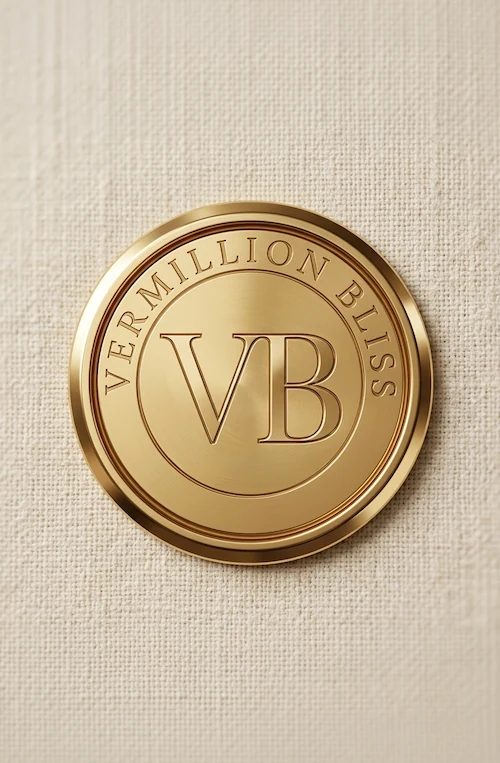
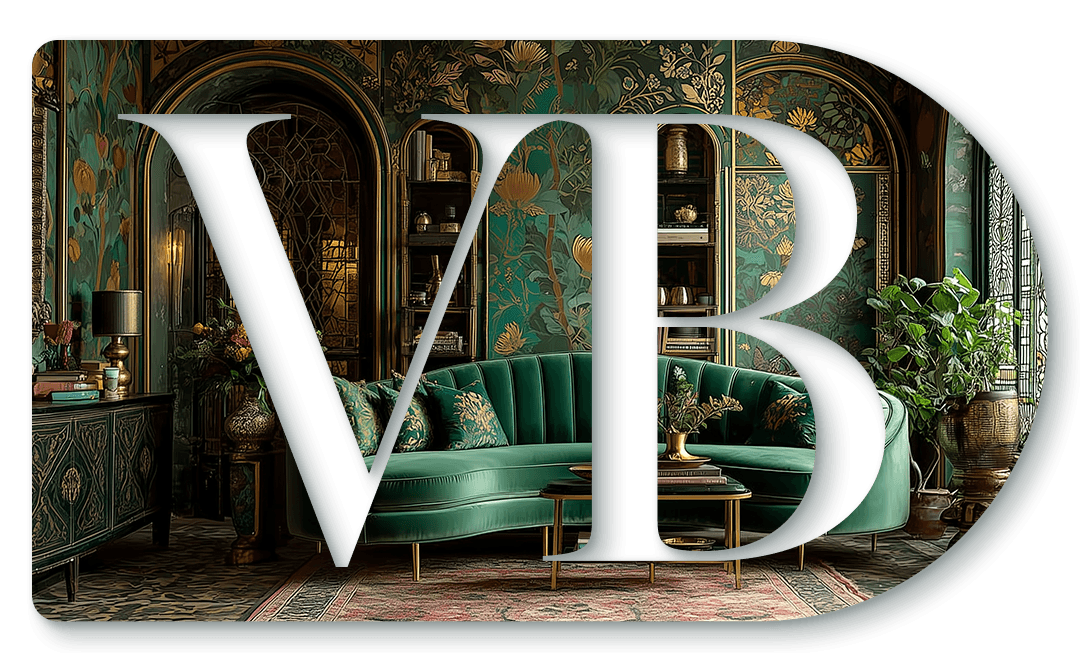
The VB monogram is a hallmark, not a headline. Deliberately quiet, intentionally refined — two letters in a serif that carries decades of imaginary history. The badge container grounds it for applications like packaging and signage. Without it, the mark floats with editorial confidence.

Color System

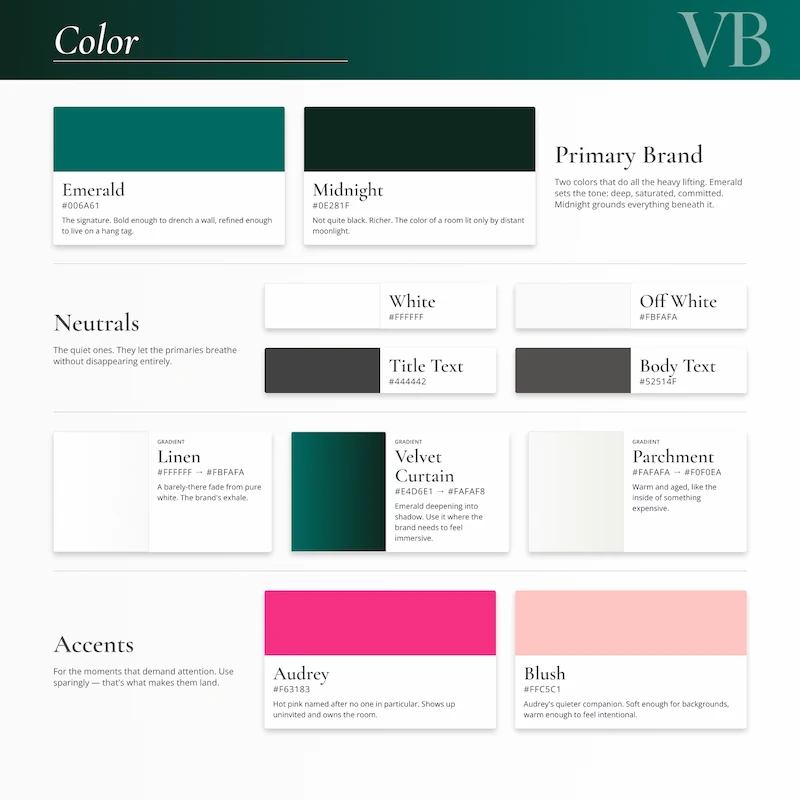
The palette starts with two colors that do all the heavy lifting — Emerald and Midnight — and builds outward from there. Accents were chosen for contrast and personality rather than safety. Audrey, the hot pink, exists specifically to remind you that old money has always had a wild side.

Typography

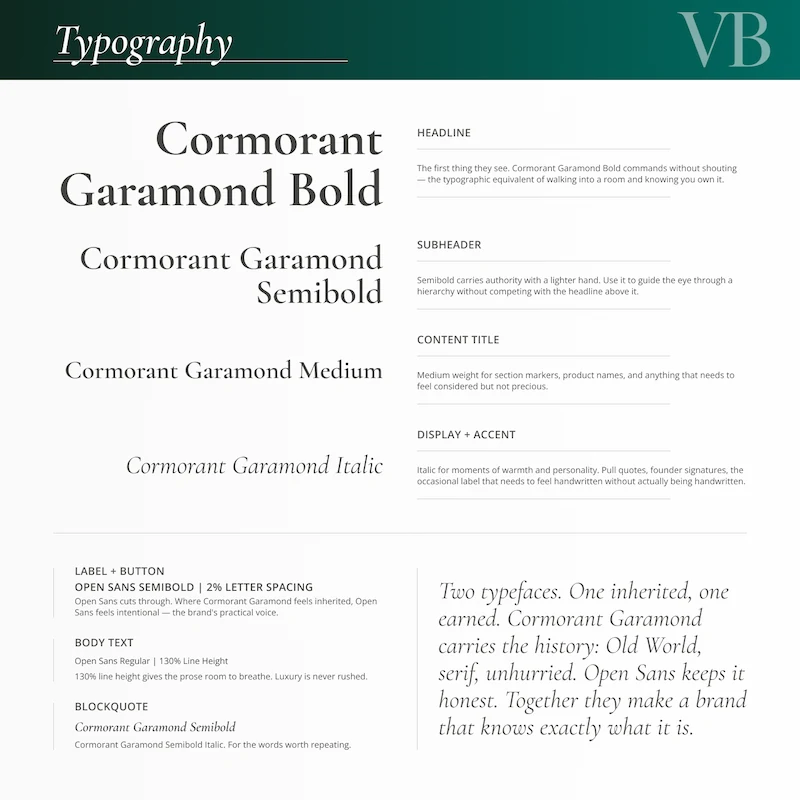
Cormorant Garamond carries the history. Open Sans keeps it honest. Together they create a brand voice that feels inherited but not stuffy — the typographic equivalent of a historic estate with very good wifi.

Brand Voice

Vermillion Bliss speaks like someone who doesn't need to sell you anything. Dry, confident, occasionally arch. The copy assumes you already know what you're looking at — because the right customer absolutely will.
TWO: THE WORLD

Furniture That Exists Only in the Imagination

AI-directed product photography for a catalog that was never manufactured.
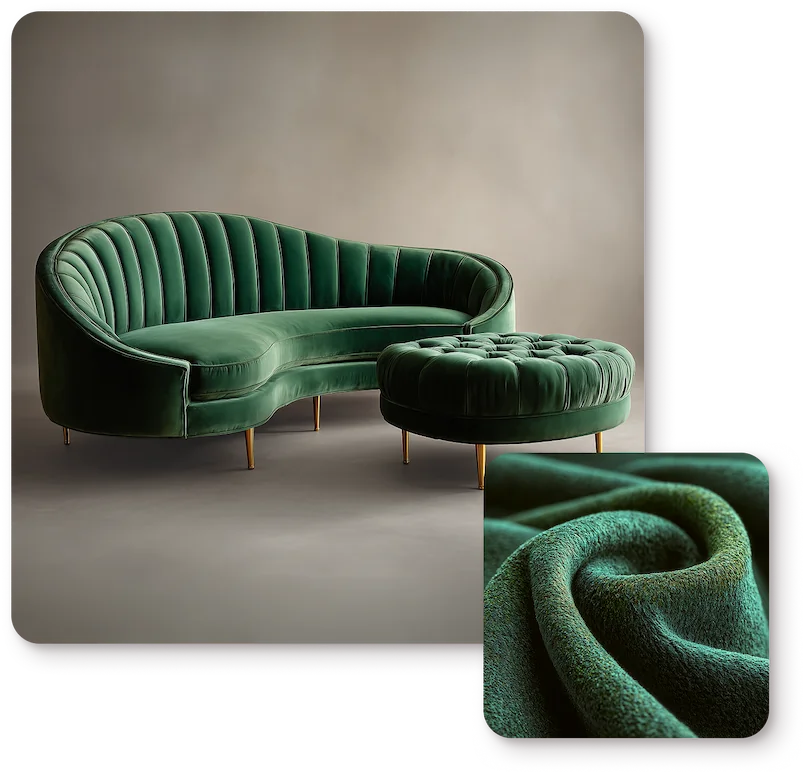
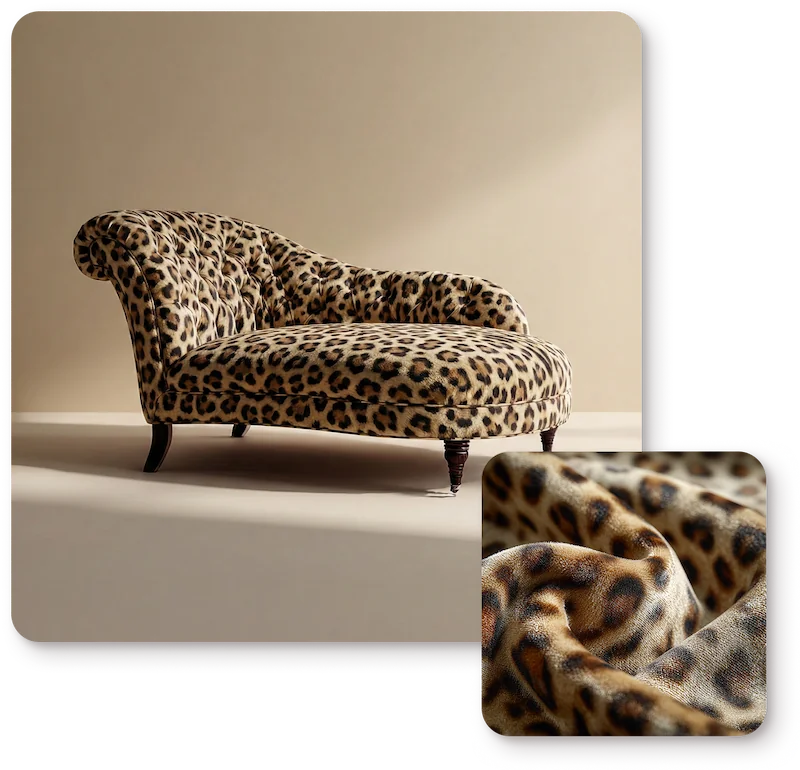
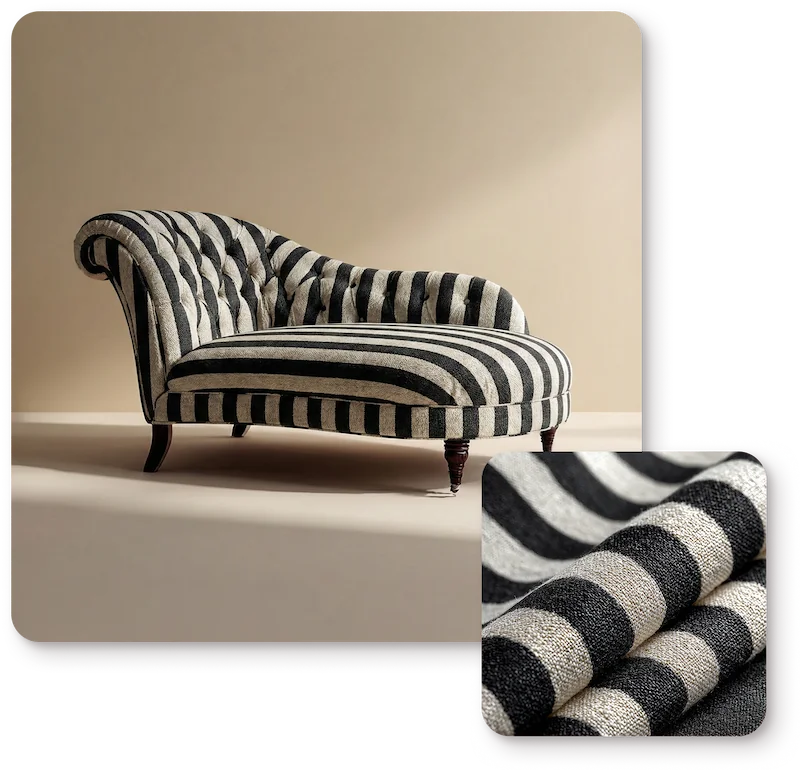
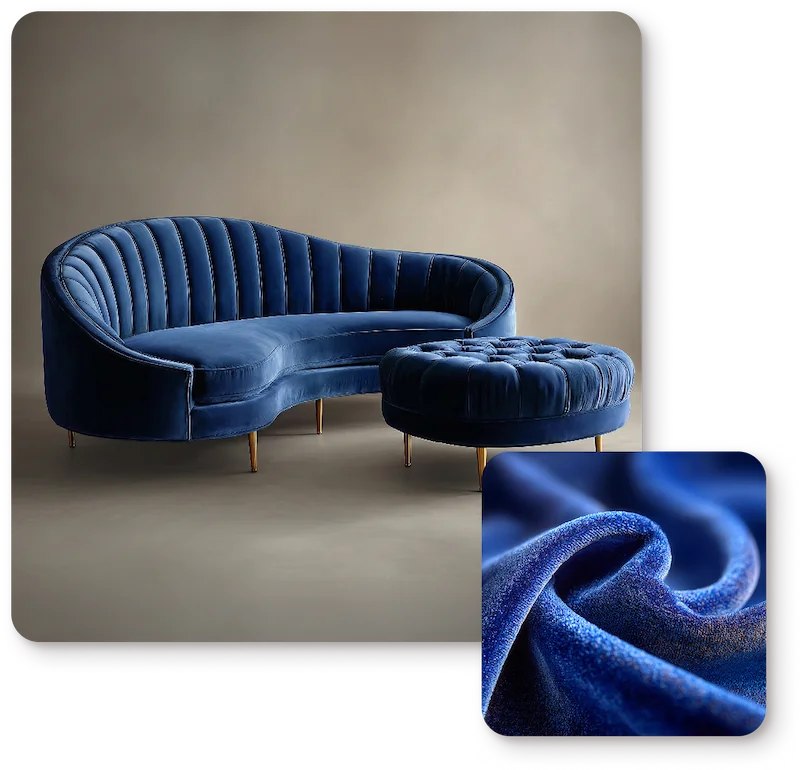
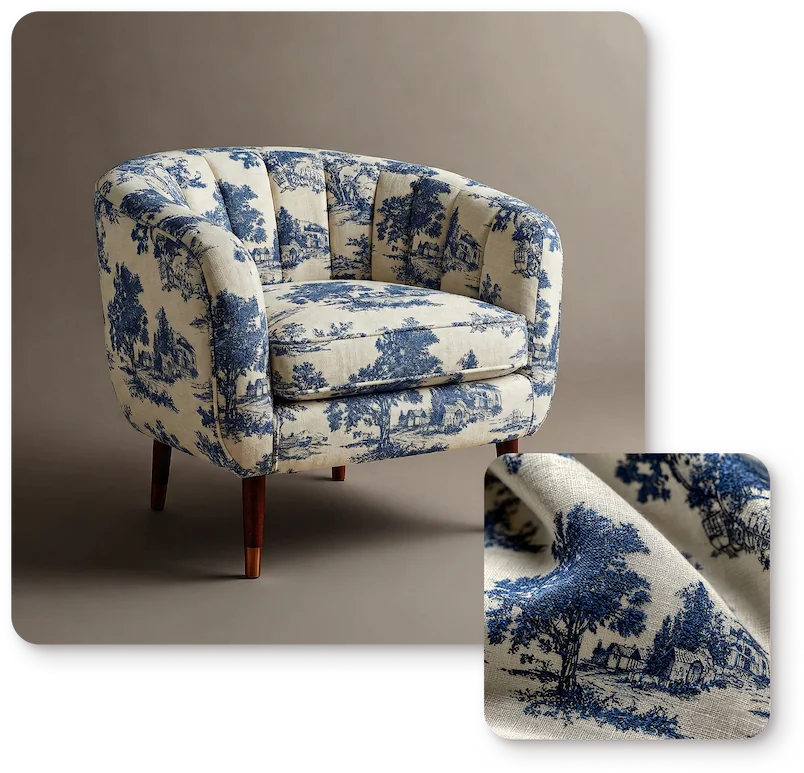
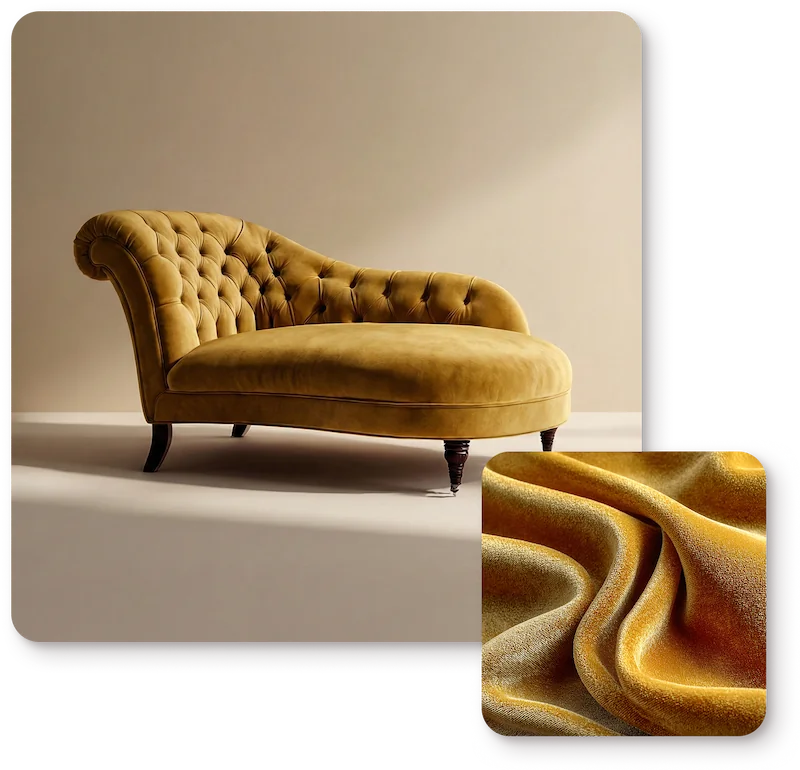
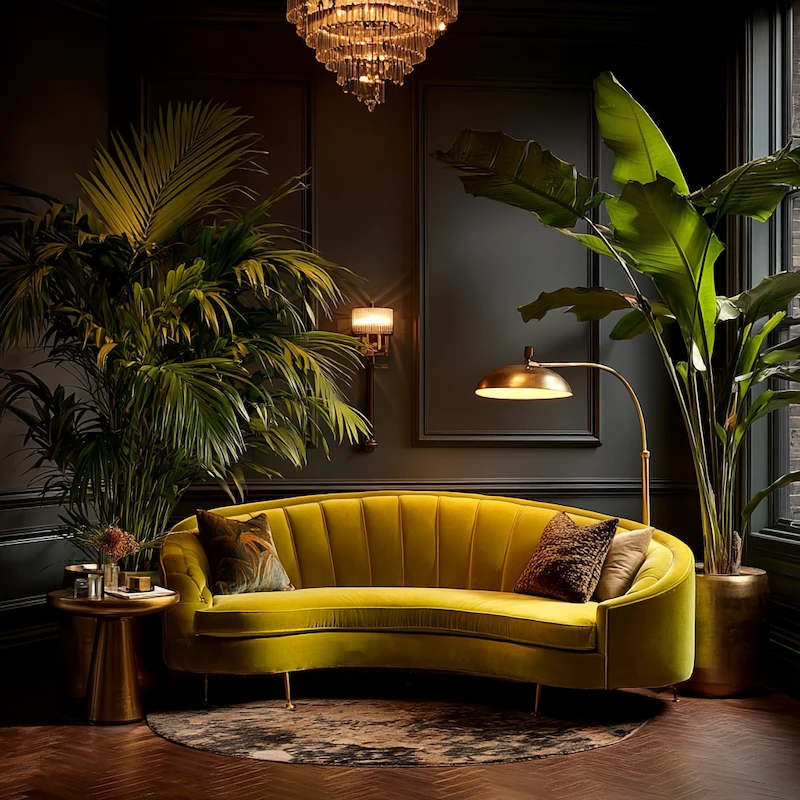
Every piece in the Vermillion Bliss collection started as a vibe. Midjourney was the first collaborator — generating furniture concepts until a coherent aesthetic emerged. Curved silhouettes. Dramatic upholstery. The kind of pieces that make a room feel like a personality statement. Once the style had enough definition to feel intentional, the real process began: stripping each piece down to a neutral canvas and rebuilding it, fabric by fabric, colorway by colorway.

Every piece in the Vermillion Bliss collection started as a vibe. Midjourney was the first collaborator — generating furniture concepts until a coherent aesthetic emerged. Curved silhouettes. Dramatic upholstery. The kind of pieces that make a room feel like a personality statement. Once the style had enough definition to feel intentional, the real process began: stripping each piece down to a neutral canvas and rebuilding it, fabric by fabric, colorway by colorway.

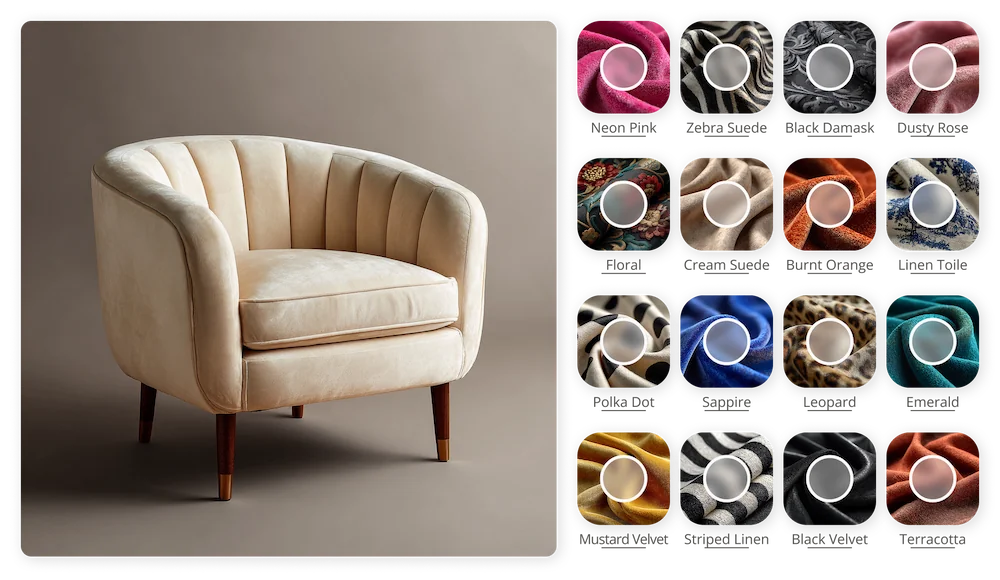
Cream chair next to 16 different fabric swatches

How I Built a Product Catalog Without a Factory

The furniture doesn't exist. The fabric swatches are pixels. But every product image had to feel like it came from a real studio shoot — consistent lighting, neutral backgrounds, the quiet confidence of something that costs $8,495.

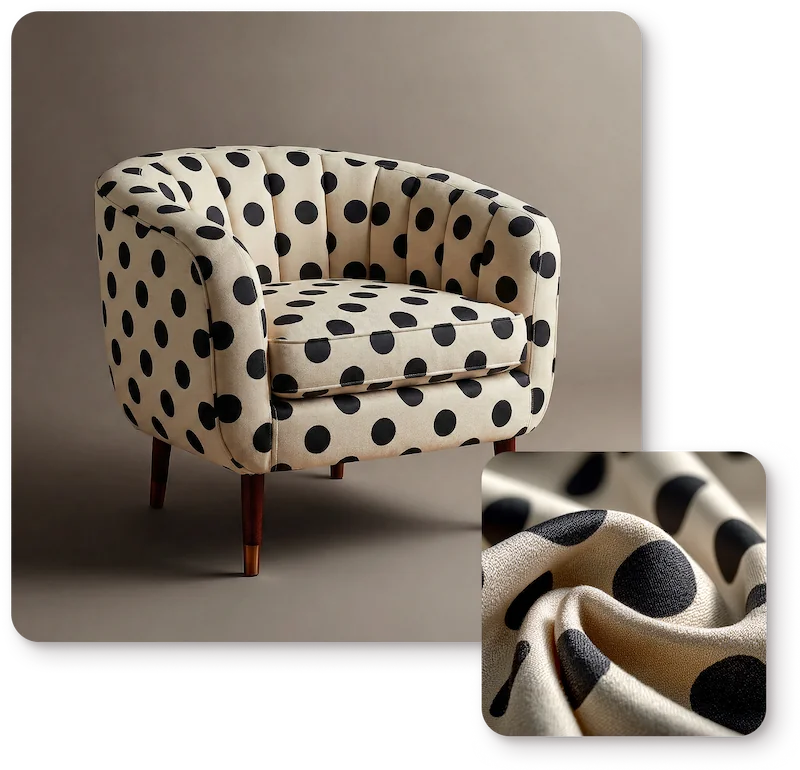
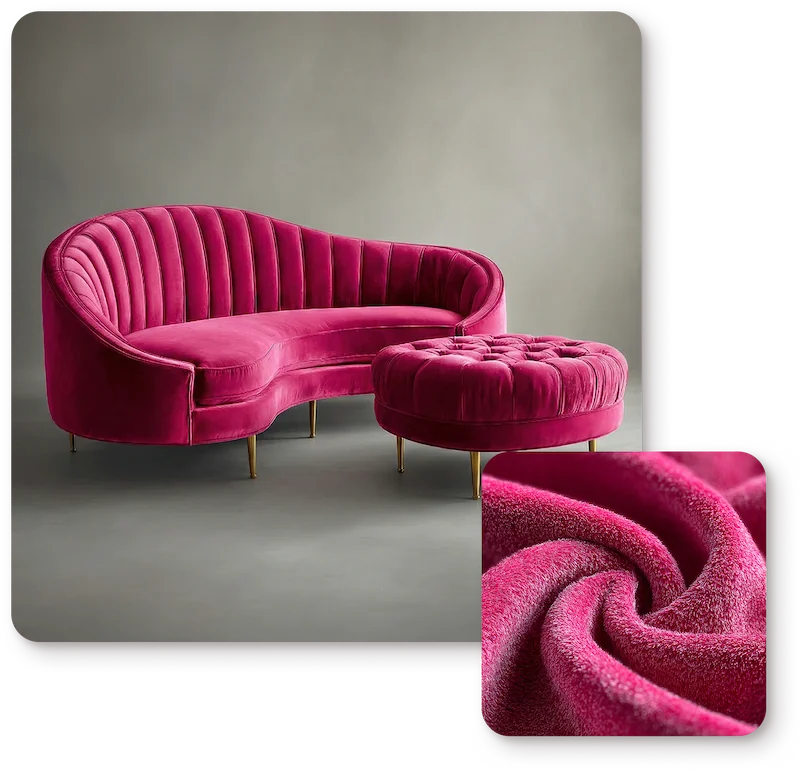
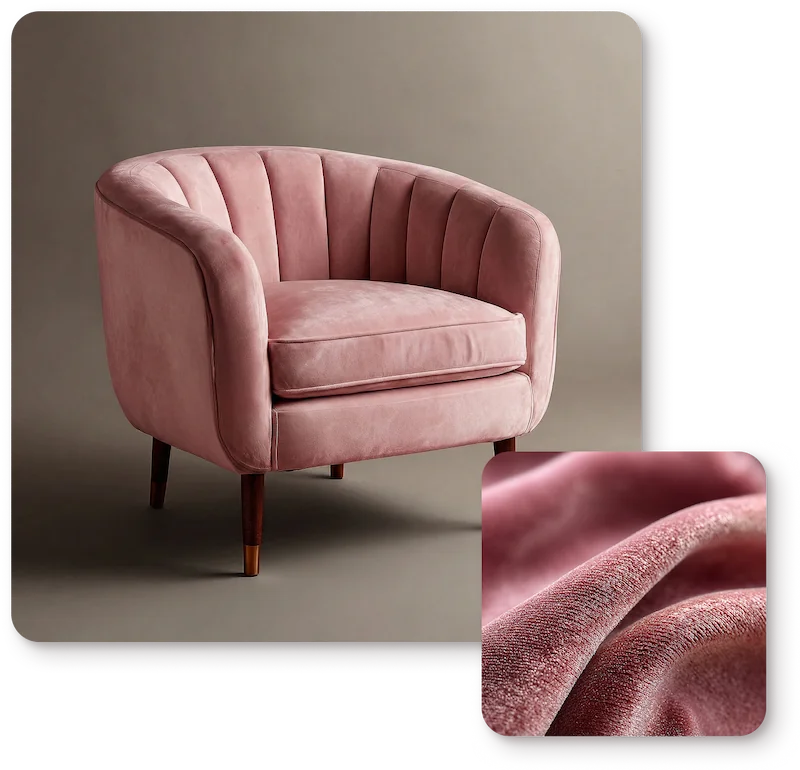
Each piece was handed to Gemini with one instruction: strip the upholstery to white, clean background. A blank canvas. Fabric swatches were generated separately in Midjourney — closeup texture shots rich enough to read as real material. Then Gemini dressed each piece in each fabric. Repeated across every colorway, for every piece in the collection. The result is a full product catalog generated without a single object ever being built.

The Furniture

Midjourney as the design studio. Dozens of concepts generated and refined until the collection had a point of view — curved, dramatic, unapologetically maximalist.

The Fabric

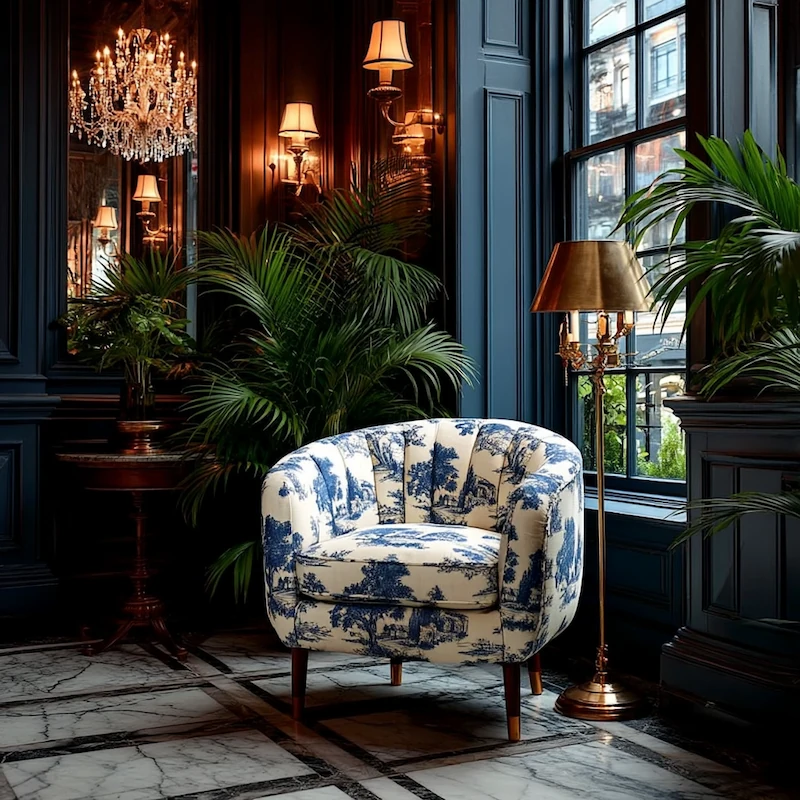
Sixteen material directions generated as texture swatches — velvets, suedes, prints, and patterns from Neon Pink to Linen Toile to Leopard. Each colorway art-directed to read as real fabric. The final edit landed on seven to eight options per piece, selected for variety, brand coherence, and the specific personality of each furniture silhouette.

The Upholstery

Gemini as the production artist. White-canvas furniture plus fabric swatch, repeated eighteen times. The closest thing to a manufacturing process that never required a factory.

The brief was: make it feel real. The budget was: zero. The result was: this.

The brief was: make it feel real. The budget was: zero. The result was: this.

The brief was: make it feel real. The budget was: zero. The result was: this.

THREE: THE EXPERIENCE

118 Versions Later

A fully interactive luxury e-commerce site, built in Figma Make by someone who had never used Figma Make.

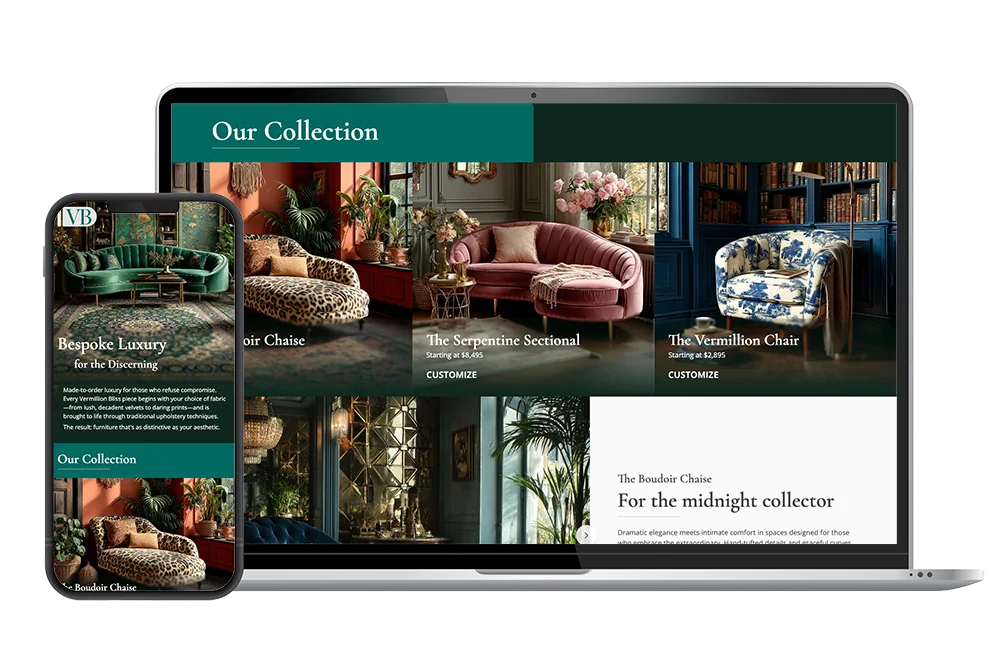
The site exists across five pages: a homepage and three product configurator pages, plus a contact form. That's a fairly modest scope on paper. In practice it took 118 iterations, a designed-from-scratch component library, a lot of mobile responsiveness troubleshooting, and one complete restart.

That number isn't embarrassing. It's the point. Figma Make is a tool that rewards persistence and punishes vagueness — the more precisely you can describe what you want, the faster it gets there. Learning that language, and learning how to hand the tool a well-organized design system to work from, is what the first third of those 118 versions actually was.

A few things that turned out to matter enormously: naming Figma layers with intention. Labeling every image file before it went anywhere near Make. Building one configurator page until it was absolutely perfect before touching the other two. Small disciplines that compound quickly once you understand why they exist.

The site exists across five pages: a homepage and three product configurator pages, plus a contact form. That's a fairly modest scope on paper. In practice it took 118 iterations, a designed-from-scratch component library, a lot of mobile responsiveness troubleshooting, and one complete restart.

That number isn't embarrassing. It's the point. Figma Make is a tool that rewards persistence and punishes vagueness — the more precisely you can describe what you want, the faster it gets there. Learning that language, and learning how to hand the tool a well-organized design system to work from, is what the first third of those 118 versions actually was.

A few things that turned out to matter enormously: naming Figma layers with intention. Labeling every image file before it went anywhere near Make. Building one configurator page until it was absolutely perfect before touching the other two. Small disciplines that compound quickly once you understand why they exist.

Faint cream linen texture
Vermillion Bliss website mockup of mobile device and laptop
Faint cream linen texture
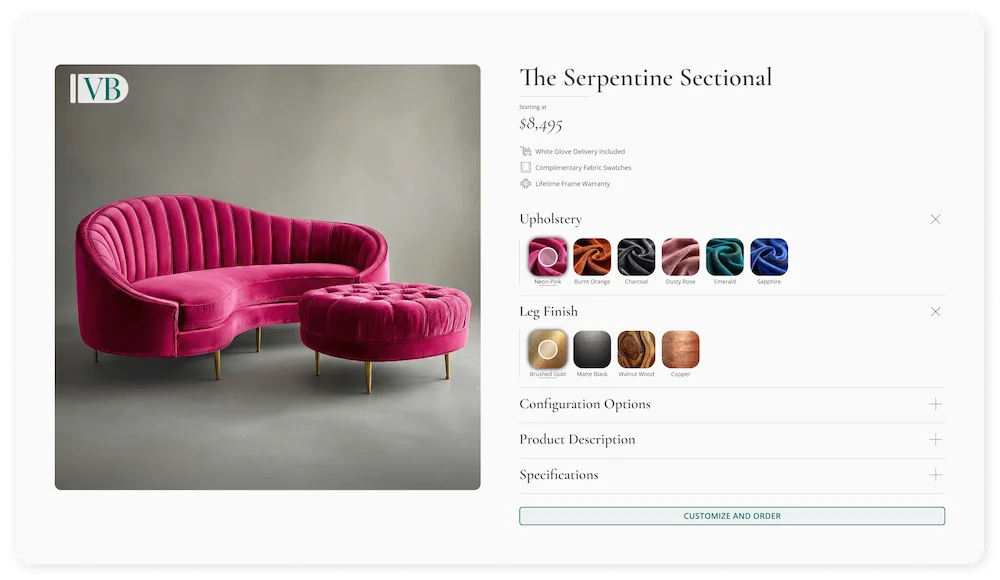
Vermillion Bliss product configurator page Figma mockup featuring neon pink velvet couch

The Configurator

The interactive fabric selector is the site's signature feature — and the one that required the most iteration to get right. Each product page allows visitors to select from seven to eight fabric options, with the product photography updating in real time to reflect the chosen material. The swap is immediate, the selected state is clear, and the whole interaction feels considered rather than bolted on.

Getting there required learning to describe UI behavior in terms Make could act on — not "make the image change" but the specific conditional logic underneath it. Once the first configurator was working correctly, the second and third were rebuilt in a fraction of the time.

The interactive fabric selector is the site's signature feature — and the one that required the most iteration to get right. Each product page allows visitors to select from seven to eight fabric options, with the product photography updating in real time to reflect the chosen material. The swap is immediate, the selected state is clear, and the whole interaction feels considered rather than bolted on.

Getting there required learning to describe UI behavior in terms Make could act on — not "make the image change" but the specific conditional logic underneath it. Once the first configurator was working correctly, the second and third were rebuilt in a fraction of the time.

The Design System

Before a single page was built, a component library was designed and handed to Make as a Figma library — button states, typography, color tokens, spacing. Giving Make a well-organized system to work from meant the site stayed visually consistent across 118 versions of iteration.

Before a single page was built, a component library was designed and handed to Make as a Figma library — button states, typography, color tokens, spacing. Giving Make a well-organized system to work from meant the site stayed visually consistent across 118 versions of iteration.

The Homepage

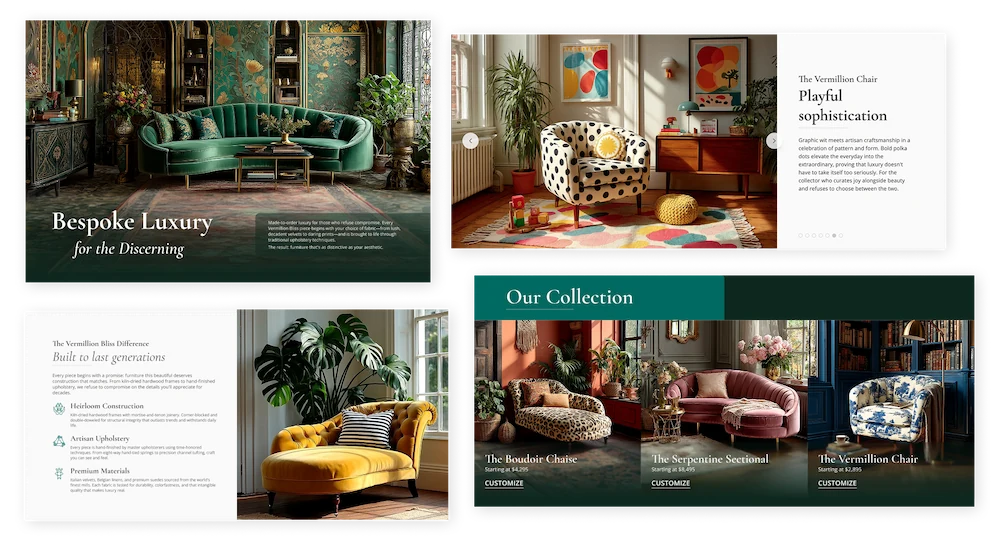
The homepage puts the brand philosophy into practice across every section — hero, collection grid, product carousel, social proof, differentiators, and a founder letter signed by Vermillion Crookston. The color drench treatment, the Cormorant Garamond headlines, the moody photography — all of it working together as a single coherent brand statement.

The homepage puts the brand philosophy into practice across every section — hero, collection grid, product carousel, social proof, differentiators, and a founder letter signed by Vermillion Crookston. The color drench treatment, the Cormorant Garamond headlines, the moody photography — all of it working together as a single coherent brand statement.

The Build

118 versions. One restart. Countless layer renaming sessions. Figma Make rewards precision — in your prompts, in your file organization, in your willingness to get one thing completely right before moving to the next. Mobile responsiveness was the final frontier, requiring dedicated prompting passes to get the layout behaving correctly across screen sizes.

118 versions. One restart. Countless layer renaming sessions. Figma Make rewards precision — in your prompts, in your file organization, in your willingness to get one thing completely right before moving to the next. Mobile responsiveness was the final frontier, requiring dedicated prompting passes to get the layout behaving correctly across screen sizes.

Faint cream linen texture
Vermillion Bliss various home page screens

A brand isn't a logo. It isn't a website. It's the thing that makes someone feel something before they read a single word.

A brand isn't a logo. It isn't a website. It's the thing that makes someone feel something before they read a single word.

A brand isn't a logo. It isn't a website. It's the thing that makes someone feel something before they read a single word.

FOUR: THE WORLD

Where the Brand Lives Offline

From screen to storefront:
What Vermillion Bliss looks like when it steps into a room.
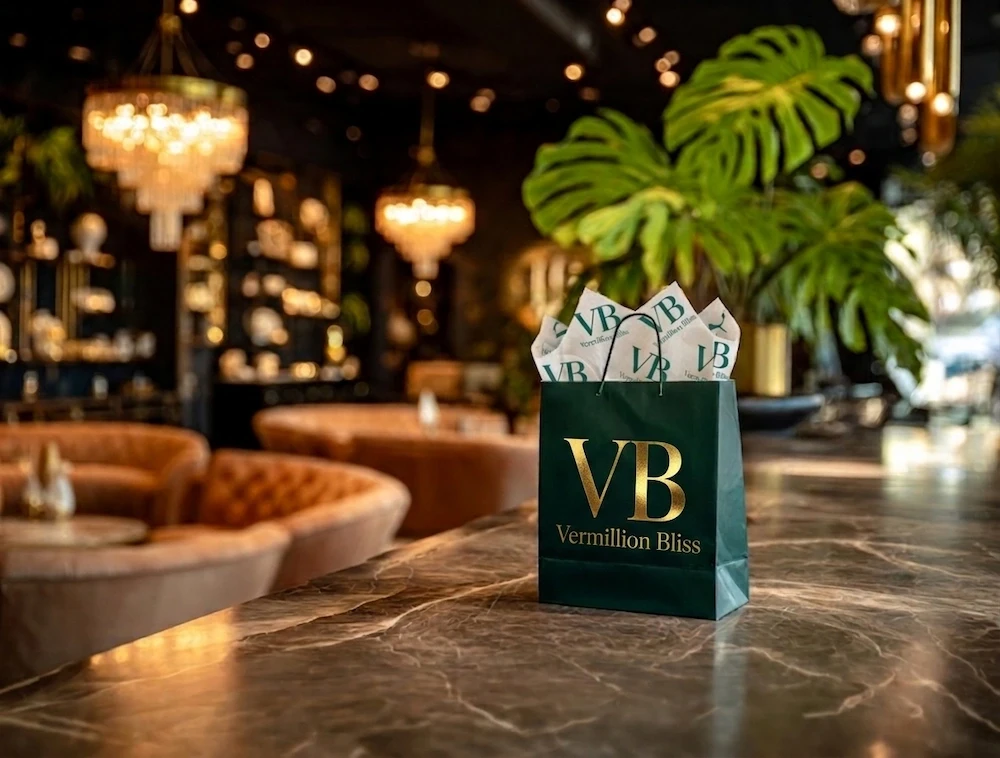
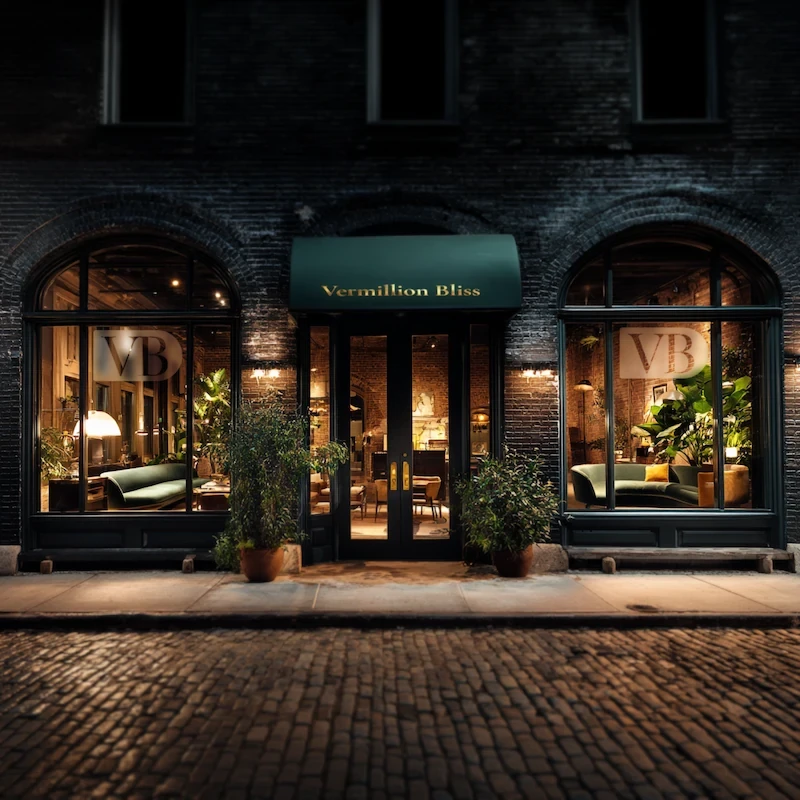
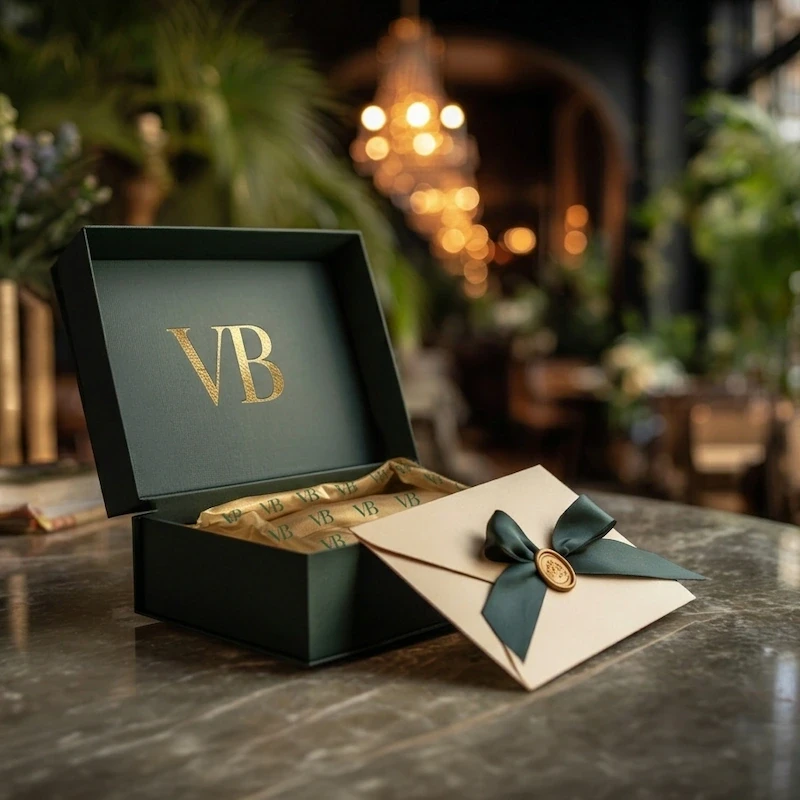
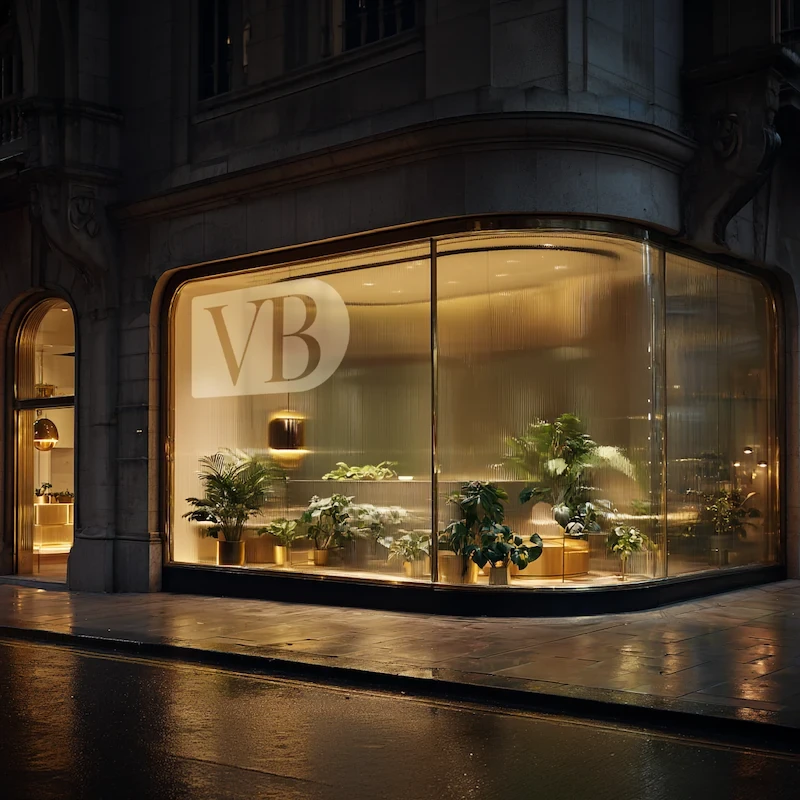
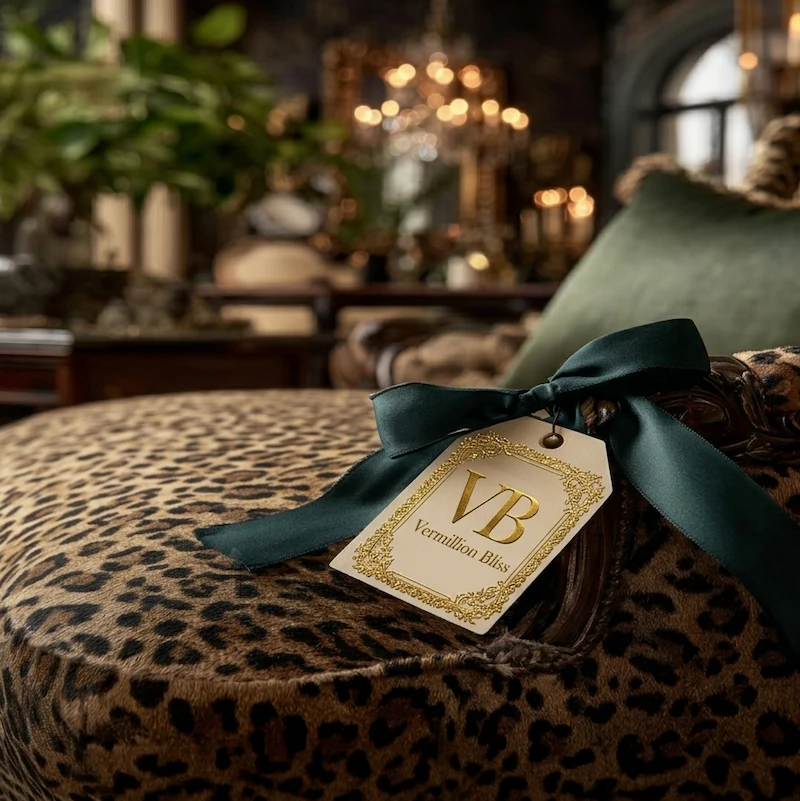
A brand that only exists on a screen is half a brand. The visual system designed for Vermillion Bliss was always intended to extend beyond the digital — into the physical spaces and objects that a luxury furniture brand would actually occupy. Hang tags. Shopping bags. A storefront. The quiet, considered details that tell a customer they're in the right place before a single word is spoken.

This section documents that extension — speculative environmental and print applications that demonstrate how the identity holds up when it leaves the browser and enters the world.

A brand that only exists on a screen is half a brand. The visual system designed for Vermillion Bliss was always intended to extend beyond the digital — into the physical spaces and objects that a luxury furniture brand would actually occupy. Hang tags. Shopping bags. A storefront. The quiet, considered details that tell a customer they're in the right place before a single word is spoken.

This section documents that extension — speculative environmental and print applications that demonstrate how the identity holds up when it leaves the browser and enters the world.

Round shiny gold VB emblem on cream linen surface

FIVE: THE REFLECTION

Yes, I Did All Of This For Fun

(and because I dream of neon pink velvet couches)

A project that started as a learning exercise and became an argument for hiring me to make beautiful things.

Vermillion Bliss proved a few things. That Figma Make is a genuinely powerful tool in the right hands. That a complete, convincing luxury brand can be built by one person with strong opinions, good taste, and a willingness to hit "generate" 118 times. That AI isn't a shortcut — it's a collaborator that rewards creative direction and punishes vagueness, exactly like every other tool worth learning.

But honestly? The most important thing this project proved is that I know exactly what I'm good at. The brand strategy, the visual identity, the art direction, the copywriting, the interactive build — none of it felt like work. It felt like play. Which is either a great sign or a concerning one, depending on how you feel about someone who genuinely enjoys making fake furniture brands at night.

Most of my professional life is spent designing for B2B SaaS companies — clean, functional, responsible design that serves real business goals and real users. That work matters and I do it well. But Vermillion Bliss is what happens when those constraints lift. When the brief is whatever I want it to be. When the client is me and the only approval needed is my own.

I want to make more of this. Whole universes of fictional companies, each with their own visual language and brand world and slightly unhinged creative direction. If you're someone who needs a designer who can think like a creative director, build like a technologist, and commit fully to a vision — even a completely made-up one — I would love to talk.

Please hire me to make beautiful stuff.
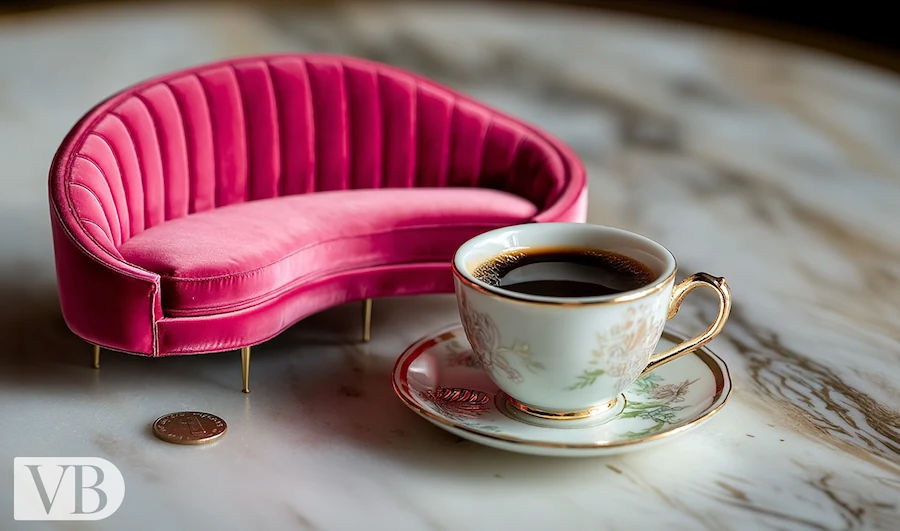
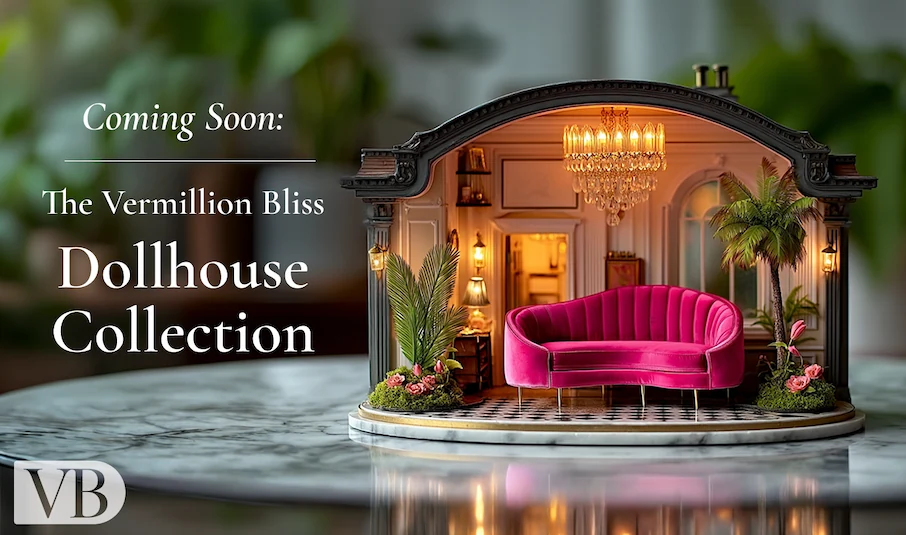
Tiny pink velvet dollhouse couch beside coin and teacup on marble surface
Tiny room of dollhouse with pink couch on table

One Last Thing…

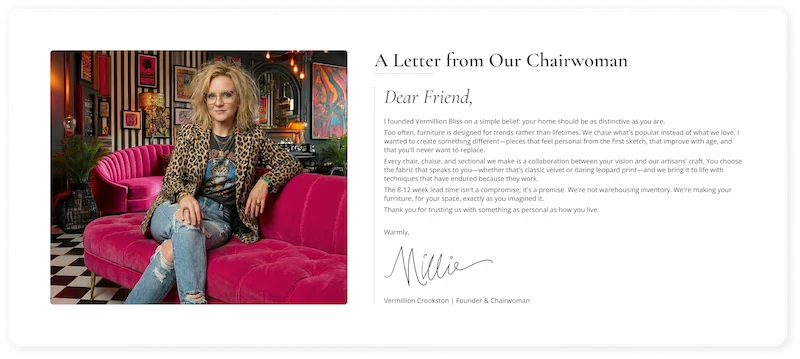
The founder of Vermillion Bliss is named Vermillion Crookston. That name belongs to my daughter — Vermillion, called Millie — who is two years old and currently more interested in snacks than furniture. Some parents dream of raising a doctor or a lawyer. I built her a fictional luxury empire just in case she turns out to have taste. The portrait in the founder letter is her, aged forward about 35 years by AI, sitting on a pink velvet sofa she has never seen and running a company that doesn't exist. She has no idea. Someday she will think it's either very sweet or very weird. Probably both.

The founder of Vermillion Bliss is named Vermillion Crookston. That name belongs to my daughter — Vermillion, called Millie — who is two years old and currently more interested in snacks than furniture. Some parents dream of raising a doctor or a lawyer. I built her a fictional luxury empire just in case she turns out to have taste. The portrait in the founder letter is her, aged forward about 35 years by AI, sitting on a pink velvet sofa she has never seen and running a company that doesn't exist. She has no idea. Someday she will think it's either very sweet or very weird. Probably both.

Letter from Chairwoman section from bottom of VB homepage

curious how far a fake product can go?

curious how far a fake product can go?

explore the full Vermillion Bliss site and shop for furniture that doesn't exist

curious how far a fake product can go?

explore the full Vermillion Bliss site and shop for furniture that doesn't exist

© 2026 Maggie Zukowski. All rights reserved. Portfolio content is displayed for illustrative purposes only and may be subject to confidentiality restrictions.
Please contact Maggie Zukowski for detailed information regarding specific projects.

© 2025 Maggie Zukowski. All rights reserved. Portfolio content is displayed for illustrative purposes only and may be subject to confidentiality restrictions. Please contact Maggie Zukowski for detailed information regarding specific projects.

© 2025 Maggie Zukowski. All rights reserved. Portfolio content is displayed for illustrative purposes only and may be subject to confidentiality restrictions. Please contact Maggie Zukowski for detailed information regarding specific projects.